



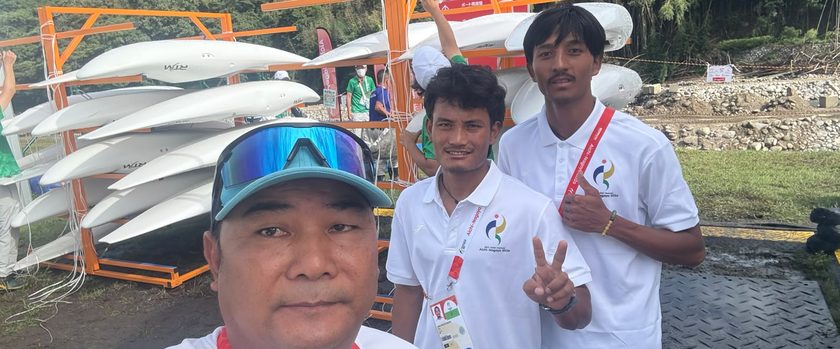
Three Asian Games. Twelve years of determination. And one Nepali paddler’s commitment to giving the next generation opportunities he never had.
Our Throwback Thursday series has been a little quiet lately. Not because we’ve run out of stories – far from it!
With floods, river scouting and pre-season risk assessments, our team has had its hands full. (More on that at the end.)
But there’s another story we’ve been waiting to share.
One that takes us away from Nepal’s rivers, first to Thailand and then to Japan. And one that brings us right back to where our Throwback Thursday series left off in July.
Remember the story of Paddle Nepal owner Nim Bahadur Magar competing at the 2014 Asian Games?
We ended that one with three little words:
To be continued…
Well, here’s the next chapter.
2014: An Athlete With Determination, but Little Opportunity
In our earlier story, From Nepal’s Rivers to the Asian Games, we shared Nim Bahadur Magar’s experience representing Nepal at the 2014 Asian Games in Incheon, South Korea.
Already an accomplished whitewater kayaker who had competed in slalom before, Nim knew how to race through gates.
There was just one rather significant problem.
Only a week or so before the event, he was told that every run would begin by launching off a starting ramp.
He had never done it before. There was no time, expertise or infrastructure to build a ramp in Nepal to try it out in advance, and no experienced coach to guide him.
So he watched YouTube videos instead, studying how other athletes launched off the ramp.
Arriving in South Korea just three days before the competition, Nim had only two days to familiarize himself with the course, the equipment and, for the very first time, the starting ramp itself.
It was an extraordinary experience, and one that left a lasting impression.
Not simply because of the challenges he faced, but because he could see the enormous difference between the preparation available to athletes from established paddling nations and the opportunities available to those representing Nepal.
Talent and determination could only take an athlete so far without access to proper training and support.
It was a lesson Nim would carry into the next chapter of his career.
2023: Returning as a Coach – and Fighting for a Better Opportunity
Nine years later, Nim returned to the Asian Games. This time, in Hangzhou, China, he wasn’t there to compete.
He was there to coach.
And he was determined that his athlete, Ganesh Gurung, better known throughout Nepal’s paddling community as Hunter, would have a better opportunity to prepare than he had been given in 2014.
The organizers had made the competition venue available for pre-Games training, providing athletes with a valuable opportunity to familiarize themselves with the course before the main event.
But taking advantage of that opportunity wasn’t as simple as booking an earlier flight.
Nim spent considerable time negotiating with the Nepal Olympic Committee and National Sports Council, advocating for permission to bring Hunter to China early enough to benefit from the training period.
Approval finally came at the very last moment.
But it came.
And for the first time in Nim’s Asian Games journey, he was able to give the athlete under his guidance something he himself had never experienced.
Seven days of training on the actual competition course, with Nim coaching him before the event.
Seven days might not sound like much.
But in a highly technical sport such as kayak slalom, where understanding the water, learning the gates and becoming familiar with the course can make an enormous difference, those seven days represented a meaningful step forward.
Hunter went on to reach the Men’s Kayak Slalom final, finishing eighth at the Asian Games.
An achievement worth celebrating, certainly. But for Nim, there was something even more important.
His athlete had arrived with time to prepare.
For Nim, it was about more than preparing one athlete for one competition.
It was about demonstrating that Nepali athletes deserved access to the same preparation opportunities offered to their international counterparts.
And it was progress worth building upon.
2026: Taking Preparation to the Next Level
Fast-forward another three years.
In September 2026, Nim once again packed his bags, this time accompanying two Nepali national athletes, Bijaya Majhi and Aashish Rana Magar, on their journey to the 20th Asian Games in Aichi-Nagoya, Japan.
Bijaya, originally from Dhankuta and a former rafting guide on the Tamor River, and Aashish, from Sindhupalchok, had been preparing to represent Nepal in kayak slalom and kayak cross.
Their training included sessions on Pokhara’s Phewa Lake, familiar waters for the Paddle Nepal team.
But this time, their preparation would extend far beyond the waters of Pokhara.
Two Weeks of International Training in Thailand
Rather than flying straight to Japan, the team flew from Kathmandu to Bangkok. From 3 to 18 September, they trained at the Asian Canoe Confederation’s International Canoe Slalom Training Camp at the Royal Thai Navy Rowing and Canoeing Training Centre in Ban Chang, Thailand, held with the support of Paddle Worldwide (the International Canoe Federation’s new name) and the Rowing and Canoeing Association of Thailand.
The camp brought together eight athletes and three coaches from Nepal, Mongolia and Indonesia, nations where dedicated canoe slalom training facilities remain limited or unavailable. Principal coaching was provided by Kuldeep Singh of the Indian Kayaking and Canoeing Association, who volunteered his expertise. For 15 days, the athletes trained on a purpose-built artificial whitewater course.
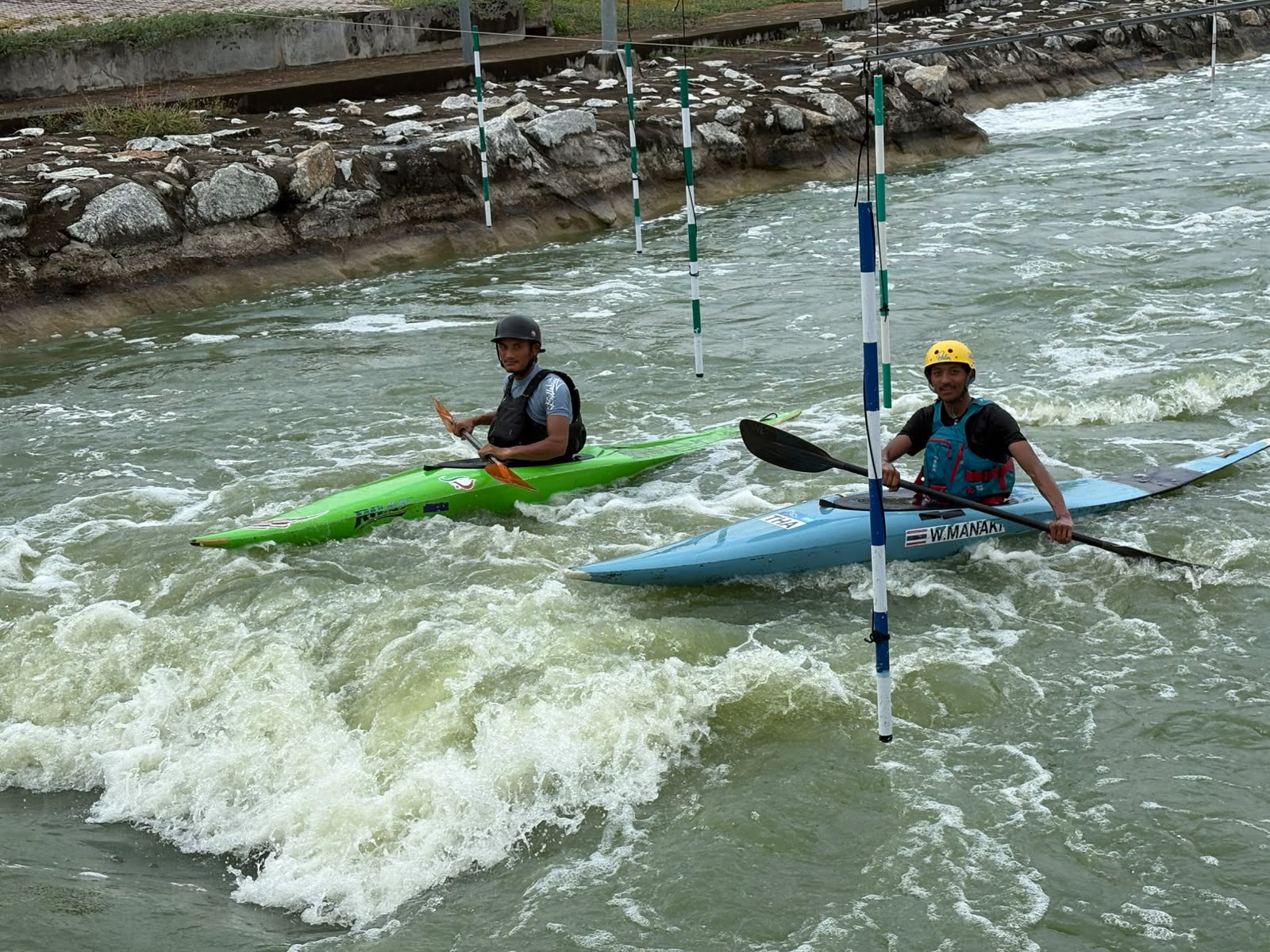
Training in Ban Chang, Thailand, September 2026
For Bijaya and Aashish, this meant an opportunity to develop their technical skills in a dedicated training environment, alongside athletes from other countries preparing for international competition.
For Nim, participating as their coach meant continuing to develop his own knowledge while supporting the athletes through an important stage of their preparation.
It was another significant step forward for Nepal’s competitive kayaking programme.
And one that would have been difficult to imagine back in 2014.
Onward to Japan
When the camp ended, the team flew directly from Thailand to Nagoya for the Asian Games.
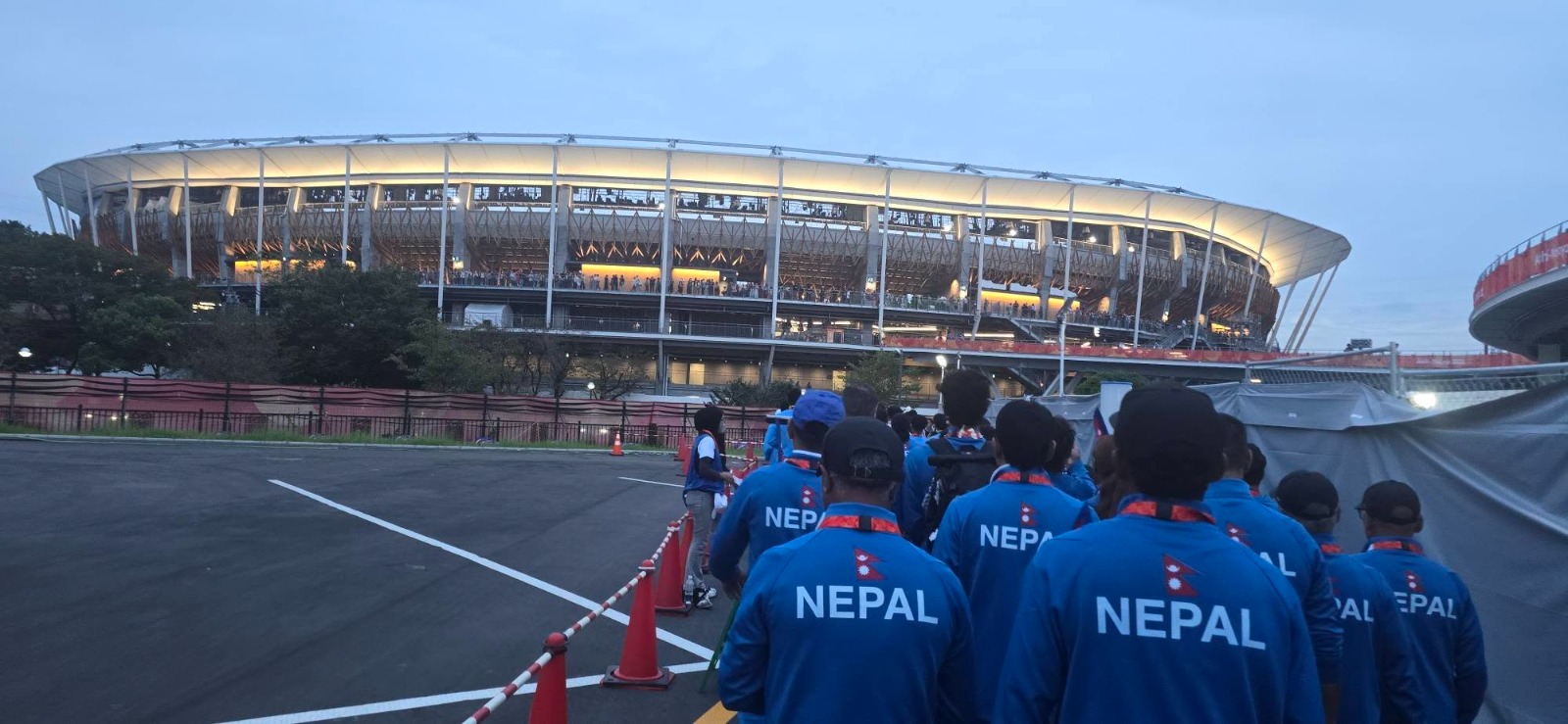
Team Nepal at the 2026 Asian Games
Accompanying the athletes were Nim, serving as national team coach, and Sudip Raj Gautam, Secretary General of the Nepal Rafting and Canoeing Association.
Sudip has been a familiar figure throughout much of Nim’s journey in competitive kayaking, and his continued involvement reflects the longstanding relationships and commitment behind Nepal’s developing paddling programme.
In Japan, the athletes had access to the competition venue ahead of their events, allowing them to continue preparing and become familiar with the course.
From 29 September to 2 October, Nepal’s athletes competed in Men’s Kayak Slalom and Kayak Cross at the Yahagigawa Canoe Slalom Course.
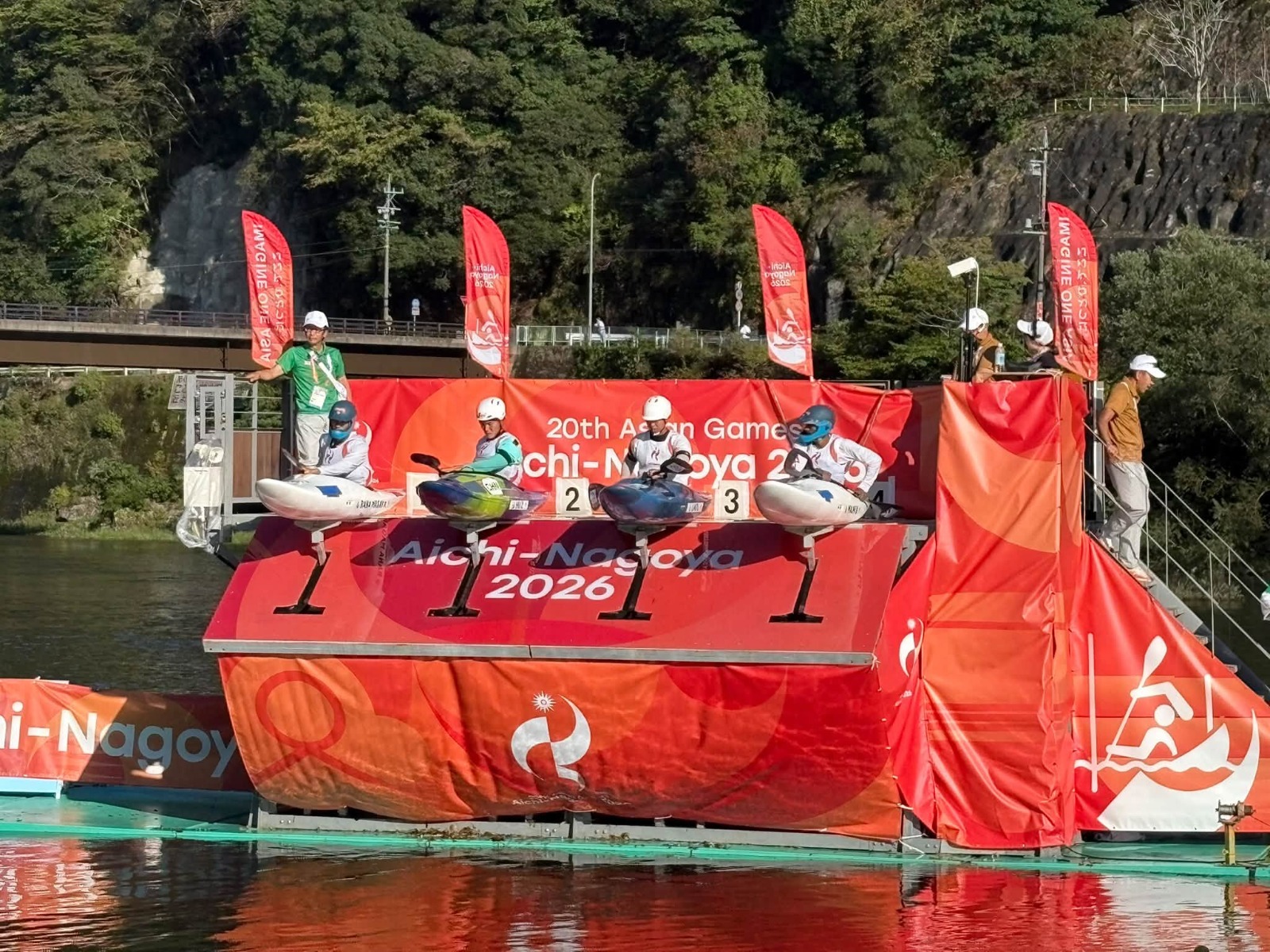
Twelve years after Nim’s first-ever ramp start, Aashish and Bijay line up on the kayak cross start ramp.
Both Bijaya and Aashish progressed to the kayak slalom semifinals.
And while every athlete naturally hopes to achieve their best possible result, for Nim, there was something equally important to celebrate.
This time, Nepal’s athletes had arrived with preparation behind them.
They had received international training, experienced specialized facilities, and benefited from coaching and support before stepping onto the starting line.
It was the kind of opportunity Nim had once wished for himself.
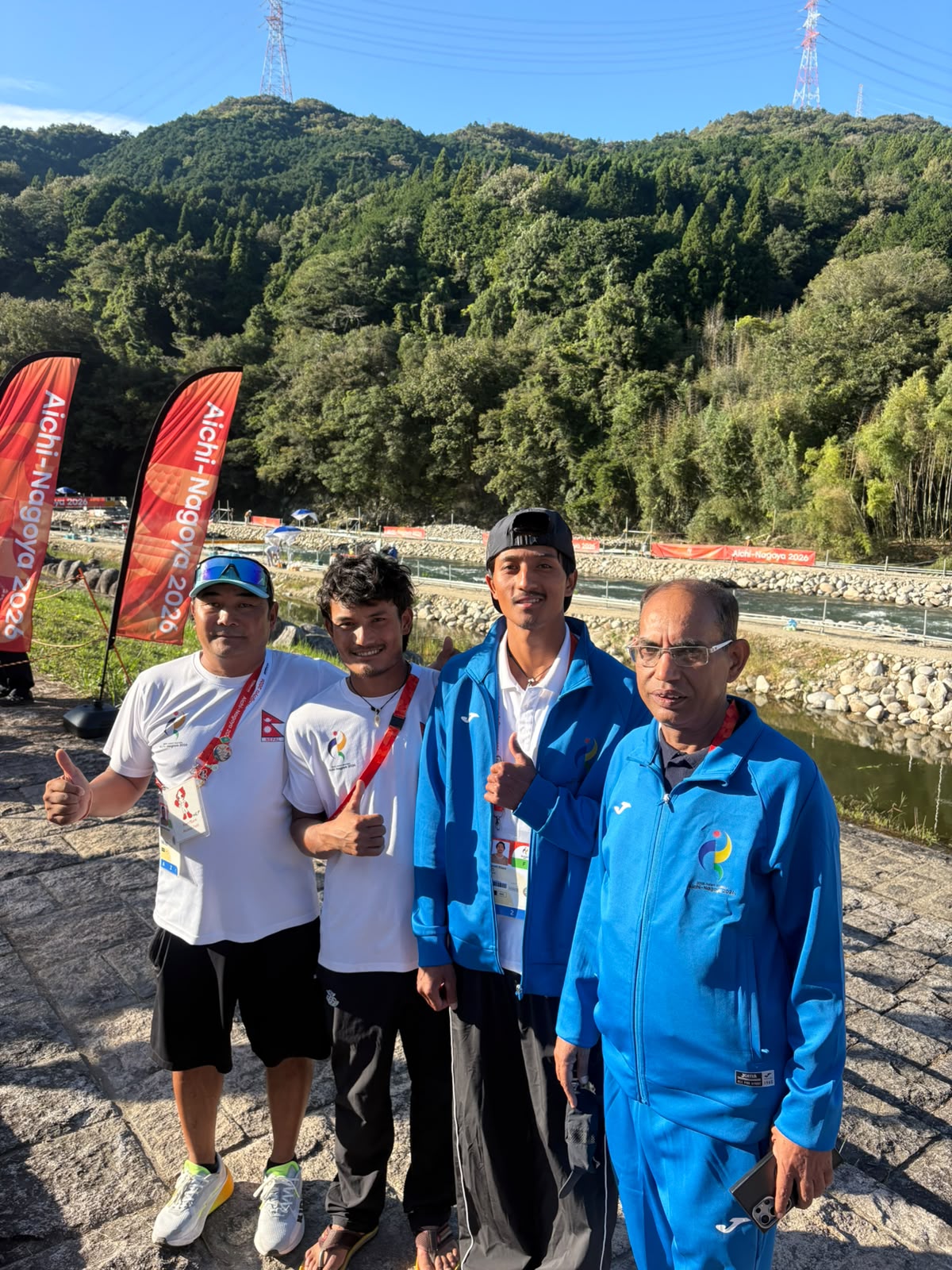
At the Yahagigawa Canoe Slalom Course
Coming Full Circle
There is something particularly meaningful about watching a journey come full circle.
From an athlete without a coach to a coach helping create better opportunities for his athletes.
None of this happened overnight.
It has taken years of dedication, persistence, difficult conversations and a willingness to keep advocating for opportunities that athletes from better-resourced nations might take for granted.
And it hasn’t happened through Nim’s efforts alone.
The support of sporting organizations, international federations, fellow coaches, officials and the athletes themselves has been essential in helping Nepal take these steps forward.
Of course, there is still a long way to go.
Nepal has extraordinary natural whitewater, talented paddlers and a growing community of athletes passionate about competitive kayaking. But access to permanent training facilities, specialized coaching, equipment and international competition opportunities remains limited.
One training camp doesn’t solve those challenges.
Nor does one successful negotiation.
But each opportunity represents progress.
And each athlete who gains international experience brings valuable knowledge and inspiration back to Nepal’s paddling community.
Back to Nepal’s Rivers
Nim, Sudip, Bijaya and Aashish returned to Nepal together on 7 October, bringing another chapter of Nepal’s Asian Games journey to a close.
For Nim, there was barely time to unpack.
Back in Pokhara, Paddle Nepal was navigating one of the most challenging starts to a rafting season in recent memory.
Following the devastating floods, our immediate priority was getting our guide teams out to scout rivers, inspect canyoning sites, reassess access routes and make difficult decisions about which adventures could safely resume.
There has been little time to sit down and reflect on Nim’s latest Asian Games experience.
It’s little wonder our Throwback Thursday series has been temporarily on hold!
But this is a story that deserves to be told.
Not because of medals or rankings.
Not because everything went perfectly.
But because it represents something Nim has worked towards throughout much of his paddling career.
Giving the next generation of Nepali athletes a better opportunity than the one he was given.
And perhaps that is the greatest achievement of all.
After all, the finish line was never really the point.
It was about giving the next generation a better starting line.
Nim Bahadur Magar at the Asian Games: At a Glance
- 2014, Incheon, South Korea (17th Asian Games): competed as an athlete in Men’s K-1 Canoe Slalom (flatwater obstacle slalom), with no coach, two days on the course and his first-ever ramp start. 18th in the heats; 9th in the repechage.
- 2023, Hangzhou, China (19th Asian Games): coach to Ganesh “Hunter” Gurung, who trained for seven days on the competition course at the Fuyang Water Sports Centre. Reached the Men’s Kayak Slalom final and finished 8th.
- 2026, Aichi-Nagoya, Japan (20th Asian Games): national team coach to Bijaya Majhi and Aashish Rana Magar, after the Asian Canoe Confederation’s International Canoe Slalom Training Camp in Ban Chang, Thailand, 3–18 September (Kathmandu to Bangkok, then directly on to Nagoya). Men’s Kayak Slalom and Kayak Cross at the Yahagigawa Canoe Slalom Course, 29 September – 2 October; both athletes reached the kayak slalom semifinals. Team official: Sudip Raj Gautam, Secretary General, Nepal Rafting and Canoeing Association.
To be continued…
