



Paddle Nepal operations update | 2 November 2026 | River conditions, safety assessments and trip availability. Last updated: 2 November 2026.
Where things stand today
| River / trip | Status |
|---|---|
| Upper Seti half-day rafting, Pokhara | Open |
| Middle Seti River and Fusre Khola half-day rafting, Pokhara | Running throughout the season |
| Lower Seti 2-day rafting and camping | Open |
| Lower Seti family rafting | Open for water-confident children from five years old |
| 4-day Learn to Whitewater Kayak Clinic, Lower Seti | Reopening |
| Kali Gandaki 3-day rafting and camping | Open: first trip of the season 6–8 November |
| Lower Kali Gandaki 6-day rafting and fishing expedition | Departs straight after the 6–8 November trip, with space available |
| Trisuli River | On hold |
| Chhimkesory Adventure Camp, Lower Trisuli River | Open, with no flood damage |
| Canyoning near Chhimkesory Camp | Running |
Moving forward with care, confidence and experience
Following the recent extreme weather events and devastating flash floods in parts of Nepal, we are pleased to share another positive update from Paddle Nepal.
First and foremost, our thoughts remain with the families and communities who have suffered loss and damage during these events. We extend our heartfelt appreciation to the emergency responders, government authorities, local communities and volunteers who continue to work tirelessly in response and recovery efforts.
We are also encouraged by the continued improvements in weather forecasting, early-warning systems and communication between government authorities, communities and outdoor operators. These developments are important for everyone living, working and traveling in Nepal.
Cyclone Arnab: the latest weather system
In late October, Nepal once again attracted international attention as a cyclonic weather system developed over the Bay of Bengal, bringing the threat of significant rainfall, flooding and heavy Himalayan snowfall.
The system affected India’s eastern coast before its remaining moisture and associated weather conditions influenced parts of Nepal between 29 and 31 October.
Nepal’s Department of Hydrology and Meteorology issued advance warnings of potentially heavy rainfall, thunderstorms and snowfall across several regions, including central and eastern Nepal and the Himalayan areas.
We are grateful for the increasingly proactive approach taken by Nepal’s meteorological authorities and disaster management agencies in monitoring developing weather systems and communicating potential risks to communities, travelers and tourism operators.
And the good news from Pokhara?
Having monitored the forecasts and allowed the weather system to pass before resuming our assessments, we are grateful to report that Pokhara and our principal river operating areas experienced little to no adverse impact.
Although we received rainfall, conditions in our immediate operating areas were considerably less severe than those anticipated in some of the national weather warnings.
As always, we did not rely on forecasts or assumptions alone.
Our senior operations and guide team subsequently conducted fresh river scouting and risk assessments to confirm conditions before expanding our commercial activities.
We are delighted to report that these assessments have resulted in several positive developments for our rafting and kayaking programs.
Lower Seti River: open and operating
2-Day Lower Seti River Rafting and Camping
Our regular two-day Lower Seti River rafting and camping adventures have been operating successfully, with fantastic feedback from both our guests and professional river guides.
Following our initial post-flood assessments, we took a deliberately cautious approach, reopening first to adventurous adult guests who were confident in the water.
With river levels continuing to recede and further assessments completed, our senior operations and guide team has now given the green light to welcome families once again!
Family Rafting is now OPEN for children as young as five years old, provided they are water-confident, have swimming ability, possess an appropriate sense of adventure and are willing and able to follow safety instructions.
As always, participation remains subject to our team’s assessment of individual suitability and prevailing river conditions.
Lower Seti River: kayak clinic reopening!
4-Day Learn to Whitewater Kayak Clinic
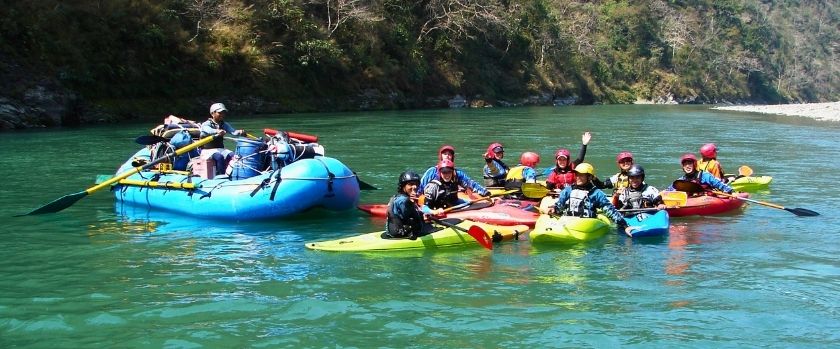
We are equally delighted to announce the reopening of our popular four-day Learn to Whitewater Kayak Clinic.
The Lower Seti River has long been one of our favorite classrooms for introducing people to the wonderful world of whitewater kayaking.
With water levels returning to a suitable range and our latest safety assessments completed, we are once again ready to welcome aspiring kayakers.
Upper Seti River: open!
Half-Day Whitewater Rafting | Pokhara
More great news!
While Paddle Nepal has continued running regular half-day rafting adventures on the Middle Seti River and Fusre Khola in Pokhara throughout the monsoon and early autumn season, we’re particularly excited to announce the return of our premier Upper Seti River rafting adventure!
Following further river scouting and risk assessments, our senior operations and guide team has given the green light to resume commercial rafting trips on this spectacular stretch of whitewater.
The Upper Seti is Pokhara’s ultimate half-day whitewater rafting adventure, offering an exhilarating combination of exciting rapids, stunning scenery and world-class whitewater-all just a short drive from Lakeside.
It’s a river we’re especially proud to share with adventurous guests during Pokhara’s peak rafting season.
The Upper Seti is back, and we’re ready for adventure!
Kali Gandaki River: green light!
3-Day Whitewater Rafting and Camping
We’re thrilled to announce that our Kali Gandaki River rafting and camping adventures are ready to resume!
Earlier in October, following river scouting and risk assessments, our operations team made the difficult decision to postpone our first planned Kali Gandaki trip of the season.
While disappointing for our guests and team, we were not prepared to proceed until we were satisfied that conditions were appropriate.
Following further monitoring and reassessment, we’re delighted that our senior operations and guide team has now given the green light to resume trips.
Our first three-day Kali Gandaki rafting and camping adventure of the season is scheduled for 6-8 November 2026, with guests booked and ready to go!
The Kali Gandaki is one of Nepal’s most spectacular multi-day whitewater adventures, combining exciting rapids, dramatic river gorges, beautiful campsites and unforgettable days on the water.
We’re looking forward to getting back out there and sharing this remarkable river with our guests.
Lower Kali Gandaki: 6-day rafting and fishing expedition
Looking for an even longer river journey? Immediately after our first three-day trip, we’re also running a six-day Lower Kali Gandaki River Rafting & Fishing Expedition, and there is still space available.
If you’d like to join, contact us or message us on WhatsApp and we’ll share the details.
As always, both trips remain subject to prevailing river conditions, weather forecasts and our team’s final operational assessments.
Trisuli River: remains on hold
While the Nepal Association of Rafting Agencies (NARA) has announced that the Trisuli River is open for commercial rafting and kayaking, and some operators have resumed trips, Paddle Nepal has made the decision to maintain our temporary suspension of Trisuli operations.
We are not yet prepared to resume commercial trips or conduct our usual recreational scouting operations on this river.
This is not a criticism of other operators or their decisions. Every company must make its own assessments based on its operating areas, experience, available information and risk-management procedures.
For Paddle Nepal, the decision is based on lessons learned through decades of operating on Nepal’s rivers.
Flash floods can dramatically alter river channels, create new hazards and deposit debris that may not be immediately visible from the surface.
Submerged vehicles, building materials, damaged infrastructure and other unexpected obstructions can present serious risks long after water levels have returned to normal.
We believe the Trisuli needs more time to settle, and affected communities need space to recover.
We will continue monitoring developments and will reassess our position when we believe conditions warrant it.
Chhimkesory Adventure Camp: open and welcoming guests!
We’re also delighted to reassure everyone that Chhimkesory Adventure Camp, our riverside family village, remains fully operational and sustained absolutely no damage during the recent floods.
Located on the Lower Trisuli River, just upstream of its confluence with the Lower Seti River and approximately a 10-minute drive away, Chhimkesory is much more than an adventure camp. It’s also home to Nim’s mum and dad, who continue to live on the family farm, while brother Santosh and his wife Rajani continue to manage the camp and welcome guests.
Although Paddle Nepal has temporarily suspended commercial rafting and kayaking trips on the Trisuli River, this does not affect our operations at Chhimkesory.
The camp continues to welcome guests enjoying our two-day Lower Seti River rafting and camping adventures, as well as those participating in our nearby canyoning experiences.
And of course, you don’t have to be joining a river adventure to enjoy Chhimkesory!
Whether you’re looking for a peaceful riverside getaway, a little time surrounded by nature, or simply an opportunity to slow down and experience the warmth of rural Nepali hospitality, our family village remains open and ready to welcome you.
The riverside is beautiful, the farm is thriving, and the welcome is as warm as ever!
A lesson in experience: knowing when not to go
On Saturday, 5 May 2012, the Upper Seti River experienced one of the most devastating natural disasters in the history of the Pokhara region.
On what began as a beautiful, sunny morning, a massive rock and ice avalanche high in the Annapurna mountains triggered a catastrophic flash flood that surged down the Seti River gorge.
The disaster claimed 72 lives, swept away homes, temples and livestock, and damaged bridges, roads and Pokhara’s water supply.
What made this event particularly frightening was that it occurred without the heavy rainfall normally associated with river flooding.
But there were warning signs.
Subsequent scientific investigations documented unusual changes in the Seti River’s behavior in the weeks preceding the disaster, including dramatically reduced water flow and changes in water color.
And on that very morning, our own founder and senior river professional, Nim Bahadur Magar, was preparing to guide a commercial rafting trip on the Upper Seti.
The team had arrived at the river’s put-in point. Rafts were being inflated, equipment was being prepared, and guests were looking forward to their adventure.
But Nim noticed something wasn’t right.
The river’s behavior and water level were unusual compared with previous days.
Drawing on his years of experience and intimate knowledge of the Upper Seti, he made the difficult decision to cancel the trip immediately.
The guests were understandably disappointed, but Nim insisted that everyone pack up and return to the bus swiftly.
Within approximately 15 minutes, the river was in full flood.
The very beach where the team had been preparing to launch was engulfed by the surging water.
It was a decision that almost certainly saved lives.
Fourteen years later, this experience remains deeply embedded in Paddle Nepal’s safety culture.
It is a powerful reminder that professional river guiding involves far more than technical paddling skills.
It requires observation, local knowledge, experience, judgment, humility and the willingness to make difficult decisions, even when those decisions disappoint guests or come at a commercial cost.
Sometimes the most important decision a river guide makes is not to go.
This philosophy continues to guide our operations today.
It is also one of the reasons we remain cautious about returning to rivers affected by significant flash floods, where altered channels, submerged debris and other hidden hazards may persist long after the water levels have receded.
We cannot eliminate every risk associated with whitewater adventure, but we can remain vigilant, informed, prepared and willing to change our plans.
That is a responsibility we take seriously.
Historical reference: NASA Earth Observatory, “Making Sense of Nepal’s Seti River Disaster,” 24 January 2014.
Our commitment to safety
For 20 years, Paddle Nepal has worked to build a culture of professional training, education, risk reduction and responsible adventure tourism.
Our commitment is not simply to operate trips whenever rivers are technically navigable.
It is to make informed decisions about whether we should be operating them at all.
That means assessing more than water levels alone.
We consider river conditions, potential hazards, access and evacuation routes, communications, weather forecasts, the capabilities of our guests, and the experience and readiness of our guides.
We also recognize that rivers are dynamic environments. Conditions can change, and no assessment can eliminate every risk.
What we can do is remain vigilant, informed, prepared and willing to change our plans.
Nepal remains open, and your visit matters
Although the recent flooding has brought heartbreaking loss to affected communities, it is important to recognize that these events have not affected every part of Nepal equally.
Many destinations, communities and outdoor activities remain accessible and operational.
We are grateful that Pokhara and our principal operating areas have been largely spared from the worst of the recent weather events.
Tourism supports an enormous network of Nepali families, guides, porters, drivers, hotels, restaurants and small businesses.
For communities that depend on responsible tourism, the continued confidence and support of visitors is especially meaningful.
We encourage travelers to seek accurate, location-specific information, choose experienced and responsible operators, and continue supporting Nepal’s remarkable people and places.
With gratitude
To everyone who has reached out with concern, offered assistance, shared encouragement or continued to travel with us: thank you.
Our thoughts remain with those still recovering from the floods.
We are grateful for the dedication of our team, the resilience of our communities, and the opportunity to continue sharing the rivers we love.
Adventure continues. With care, confidence and respect for the rivers.
With grace & gratitude,
Kelly, Nim & the Paddle Nepal Team
Paddle Nepal | Pokhara, Nepal
Please note: All trip availability remains subject to prevailing weather, river conditions, ongoing risk assessments and the professional judgment of our operations team. Read our earlier river and flood update from 29 September, and contact us or message us on WhatsApp with any questions about your trip.
