
Long before canyoning became one of Nepal’s most popular adventure activities, Jalberi Waterfall was simply part of Nim’s childhood playground.
 Growing up in Chhimkesory, Tanahun, Nim and his brothers would spend their days exploring the waterfalls and pools hidden in the jungle near their family village. They fished in the streams, swam in the pools, leapt from cliffs into deep water, and created their own makeshift slides. Nim remembers stuffing bundles of tall grass into his underpants for padding and cutting up plastic jugs to create homemade slider seats for launching himself down the rocks.
Years later, while working season after season in Japan as a professional rafting and kayaking guide, Nim discovered canyoning. He was amazed to find that people were paying good money to do many of the same things he and his brothers had spent their childhood doing for fun—only with much more sophisticated equipment and safety systems.
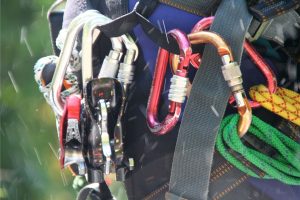 Inspired by the idea, Nim trained as a professional canyoning guide and began investing in specialized equipment including booties, wetsuits, helmets, harnesses, ropes, carabiners, ascenders, descenders, bolts, and anchors. As he gained experience, he kept thinking about the waterfalls of his childhood and realized they offered the perfect setting to introduce canyoning adventures to Nepal.
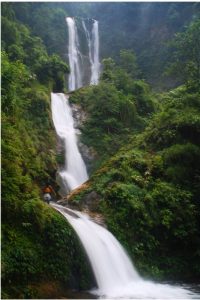 Back in Chhimkesory, Nim and his brothers returned to the hidden waterfalls they had known since childhood. Located just a ten-minute drive from the family farm that is home to Chhimkesory Adventure Camp, the falls sit above the Trisuli River and only a short distance from the main highway connecting Kathmandu, Pokhara, and Chitwan. Despite being so accessible, the waterfalls remained largely unknown outside the local community.
The brothers cleared access trails, explored new canyon sections, discovered additional waterfalls and pools, and gradually developed what would become the Jalberi (Lamo Jharana) Canyoning Route.
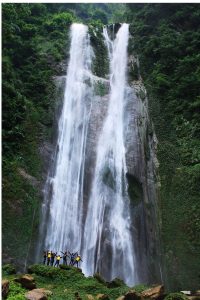
Using the skills and systems Nim had learned abroad, the team installed the first anchors and bolts, established safe descent lines, and began guiding guests through a multi-waterfall adventure that combines abseiling, cliff jumping, natural slides, and swimming through crystal-clear pools.
To support the project, Nim purchased a small piece of land beside the falls to create a base and employed local people to help protect the site, maintain the trails, and keep the area clean.
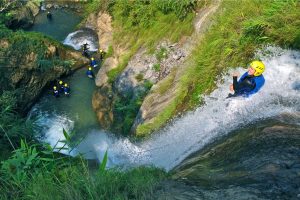
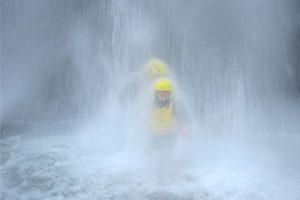
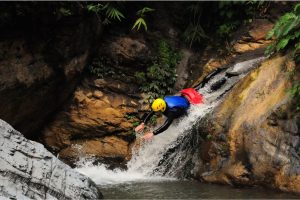
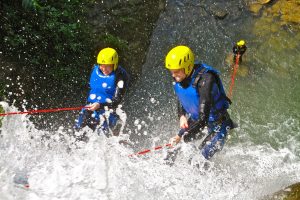
While waterfall abseiling adventures already existed elsewhere in Nepal, Jalberi helped introduce a more complete canyoning experience and quickly became a favourite destination for both international visitors and Nepali adventurers.
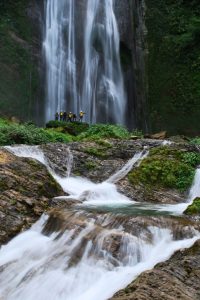 Today, thousands of people visit Jalberi Waterfall each year. Some come for the adrenaline rush, while others simply enjoy the beauty of the falls, cool off in the pools, or picnic beside the water. The surrounding community has embraced the destination, and improved road access now allows many more people to experience this special place.
The site also complements the area’s river adventures, sitting close to the Trisuli and Lower Seti Rivers that helped shape Paddle Nepal’s early years. Together, these rivers, waterfalls, and surrounding hills continue to attract travellers seeking, nature, adventure and a deeper connection with rural Nepal.
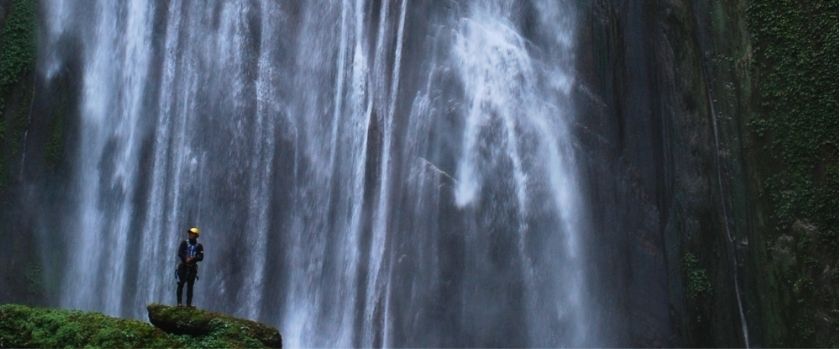
This week’s #PaddleNepal20 Throwback Thursday looks back at how a childhood playground, a little inspiration from abroad, and a lot of hard work helped put Jalberi Waterfall on Nepal’s adventure map. The feature photo captures Nim during those early years of exploration and route development—standing beneath the falls with a vision that would grow into a destination enjoyed by thousands and continue to benefit the local community today.
(To be continued…)
This reflection is part of Paddle Nepal’s 20-year journey on Nepal’s rivers.