
A Growing Company
By the time Paddle Nepal entered Nepal’s first National Rafting Championship, a great deal had already happened.
Nim had built a reputation as one of Nepal’s strongest kayakers. Years of competition had shaped him — national championships, international races, and countless hours training on rivers across Nepal and beyond.
Paddle Nepal Pvt. Ltd. had been registered. Offices had opened in Kathmandu and Pokhara. A fleet of rafts, kayaks, camping gear, and systems continued growing.
Learning to Race as a Team
But rafting was different.
Kayaking could often be deeply individual.
Rafting demanded something else — trust, communication, leadership, and teamwork.
In some ways, Team Paddle Nepal had already been building toward this moment.
During the Himalayan Whitewater Challenge in November 2007, rafting had been added as a fun additional event alongside the kayaking competition — not yet a major national championship, simply a chance for river guides and paddlers to race together in a different format.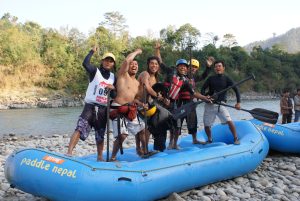
Team Paddle Nepal won.
That earlier team included Nim, brothers Som and Santosh, cousin Surya Magar, and good friends Raju Thapa and Sanu Babu Sunuwar — not yet a legendary figure in Nepal’s adventure sports community, but simply another brother from another mother, and part of the growing Monkey Family created over years of friendship, rivers, and adventures connected through Pete Astles of Peak UK.
Some journeys reveal themselves slowly. His is one we will return to.
Nepal’s First National Rafting Championship
On 4–5 April 2008, Nepal’s first National Rafting Championship was organized on the Bhote Koshi River — one of Nepal’s classic stretches of whitewater and still considered world class today.
The event was organized entirely by the Himalayan River Guide Association Nepal (HRGAN) and run in alignment with International Rafting Federation (IRF) racing guidelines. It was supported by the Nepal Tourism Board and industry sponsors — including Paddle Nepal.
Since Paddle Nepal was first established, supporting Nepal’s river community had become part of the company culture. Beginning in those early years, Paddle Nepal made financial contributions toward industry events whenever possible, including continued support of the Himalayan Whitewater Challenge and later sponsorship support for Nepal’s first National Rafting Championship.
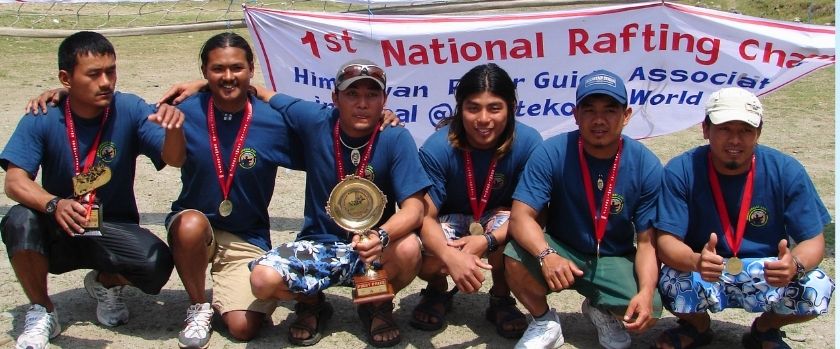
Team Paddle Nepal’s roster shifted slightly, with Binaya Lama stepping in for Sanu Babu. Otherwise, the core team remained unchanged.
River Community
Teams gathered from around Nepal.
Guides camped riverside.
Stories were shared over meals.
Friendly rivalries mixed with serious competition.
For those already familiar with the Himalayan Whitewater Challenge scene, the atmosphere felt familiar — camping, river life, competition, community, and the unique energy that forms when Nepal’s river community gathers in one place.
Meals stretched into stories.
Competition mixed with laughter.
And as often happens at river gatherings in Nepal, music and dancing naturally found their place too.
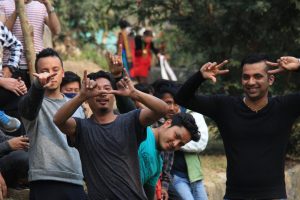
Groups of guides — mostly men dancing together shoulder to shoulder with easy confidence, cultural pride, and remarkable freedom — celebrating friendship, river life, and simply being together.
Joyful.
Unselfconscious.
Entirely Nepal.
To this day, it remains one of Kelly bhauju’s favourite parts of Nepali culture — the brotherhood, the joy, and the freedom to simply dance together.
One flick of the wrist at a time. 😄
And every bit as memorable as the racing itself.
The championship included sprint racing, slalom, and downriver racing, along with a compulsory raft flip drill built into the downriver event — testing not only speed, but teamwork, precision, river reading, endurance, and rescue skills on one of Nepal’s most challenging rivers.
Ready — and Branded
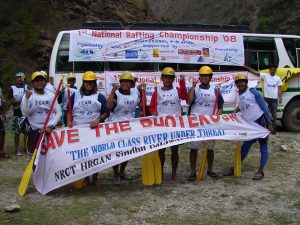 Team Paddle Nepal arrived ready.
And branded.
Long before social media marketing and polished content plans, Nim already understood something important — show up professionally, take pride in what you are building, and represent it well.
Paddle Nepal branding was proudly there.
In fact, Nim and crew had even taken the time to paint every team helmet the same bright yellow.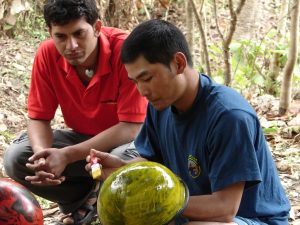
Matching helmets were not exactly going to make a raft paddle faster.
But details mattered.
Team identity mattered.
Pride in what you were building mattered.
Looking back now, it feels like another small clue that even in those early years, Nim already carried a clear vision for Paddle Nepal.
Captain, Coach, and Commitment
Nim served as team captain and coach.
Alongside competing, he also quietly helped support aspects of technical preparation and event setup — work he had already contributed for years through the Himalayan Whitewater Challenge and something that would continue becoming part of his long-term contribution to Nepal’s river community.
Over the years, some people may have viewed balancing competition and event responsibilities in different ways.
But what remained constant was the workload.
Training.
Team leadership.
Preparation.
Coordination.
Service.
Long days before races.
Long days after races.
Much of what helps river events succeed happens quietly, long before competitors ever reach the starting line.
A New Championship Title
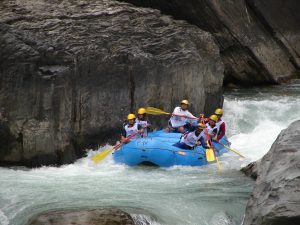 Team Paddle Nepal entered that very first National Rafting Championship.
And won.
A new championship title.
Looking back now, perhaps what mattered even more than that first victory was what it represented.
This was no longer simply Nepal’s national kayaking champion standing on another podium.
Something was shifting.
Leadership was growing.
A company was becoming a team.
A team was becoming something larger.
Building Paddle Nepal Together
Brothers Som and Santosh were not simply Paddle Nepal raft team members by this stage — they had already become an important part of helping Nim build and support the growing business.
In Nepal, being the oldest son often carries responsibility from an early age.
Nim is the eldest of six siblings — three brothers and three sisters.
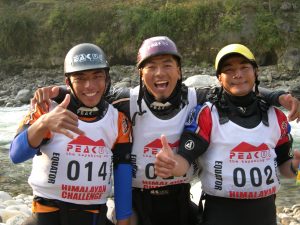 Santosh, the middle brother.
Som, the youngest.
The river ran through all three brothers.
Like Nim, both Santosh and Som became highly talented kayakers in their own right, frequently competing and reaching podium positions at the Himalayan Whitewater Challenge.
Santosh would eventually even represent Nepal internationally at a kayaking event in Europe.
During these early Paddle Nepal years, they were not thinking about company structure or long-term plans.
They were brothers.
Guides.
Competitors.
Helping wherever needed.
Loading boats.
Preparing gear.
Supporting trips.
Building Paddle Nepal together.
And although nobody knew it at the time, this first championship victory would prove to be only the beginning.
The rivers kept flowing.
The company kept growing.
Brothers Som and Santosh would continue helping shape Paddle Nepal alongside Nim — not only as talented paddlers and teammates, but through years of hard work supporting trips, operations, logistics, and the steady day-to-day effort required to build a growing adventure company.
Some years later, in recognition of those early years of commitment, contribution, and shared effort, Nim and Kelly would gift Som and Santosh small ownership shares in Paddle Nepal.
Not because it had been expected.
But because some contributions deserve recognition.
Especially the ones built quietly over many seasons.
📷 Photo by Kelly bhauju — now Nim’s wife, helping behind the scenes, cheering from shore, and slowly discovering that Paddle Nepal was becoming her story too.
(To be continued…)
This reflection is part of Paddle Nepal’s 20-year journey on Nepal’s rivers.