

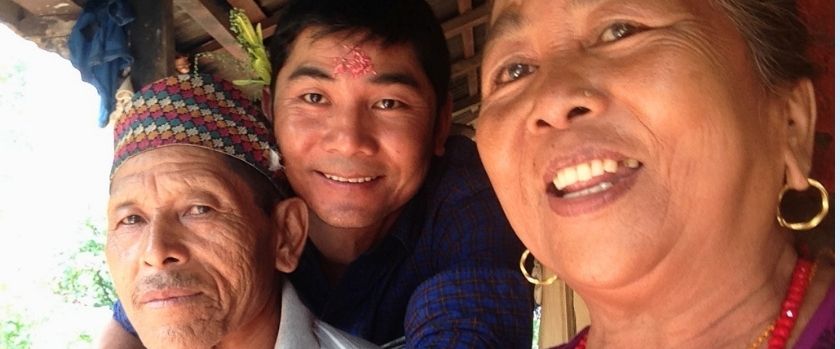
After a brief travel pause, our #PaddleNepal20 Throwback Thursday series returns with a story that is especially close to our hearts.
This week, we’re heading back to the beginnings of what would become Paddle Nepal’s Chhimkesory Adventure Camp.
Long before there were safari tents, cottages, Wi-Fi, or even a suspension bridge, there was simply an idea.
Nim wanted to create a way for his parents to continue living on the family’s ancestral farm as they grew older, rather than feeling pressure to relocate to a city like Pokhara or Chitwan, where many family members had already moved. The vision was to create a place where guests could experience rural Nepal while helping support the family and preserve a traditional way of life.
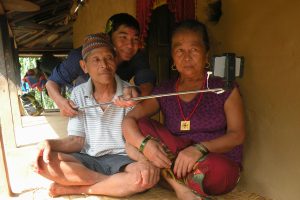
Not long after returning home from a season abroad, Nim proudly introduced his parents to a new selfie stick he had purchased in Japan. Mum appeared unconvinced by the technology.
Our camp was built on the lower portion of our family property beside the Trisuli River, giving guests a peaceful riverside experience while allowing Aama and Baa (Mum and Dad) to maintain their privacy higher up on the farm. Of course, they are incredibly proud of what has been created, and visitors are often welcomed to visit the homestead with invitation by family members or our extended guide team who work on the property and enjoy sharing our village way of life.
What makes Chhimkesory special is that nearly every part of it was built by hand by our family and guide team.
Trees were carefully harvested from our property’s upper forest, carried down the hillside, dried, and hand-sawn into lumber. Stones were gathered from the riverbanks. Driftwood found new life as furniture. Buildings, pathways, dining spaces, and shelters slowly emerged through countless days of hard work and community effort.
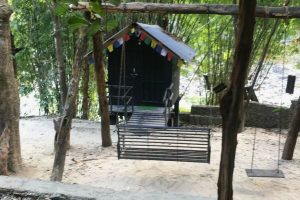
Camp itself has always been intentionally simple. No luxury spa. No infinity pool. Just a beautiful riverside setting, some hammocks to relax, comfortable places to sleep, good local food, and a genuine connection to nature, local culture, and village life.
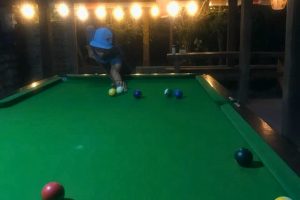
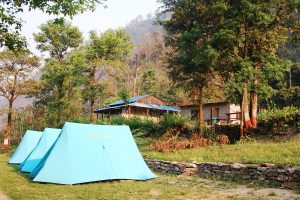
Over the years, accommodation options have grown to include riverside beach camping, open-air shelters, traditional tents, a few safari-style glamping tents, and a couple of rustic wooden cottages. Somewhere along the way, a pool table arrived and made it across the suspension bridge, and eventually even Wi-Fi found its way to the village.
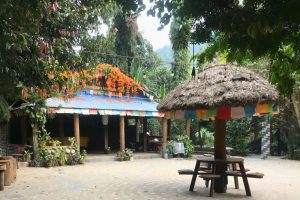
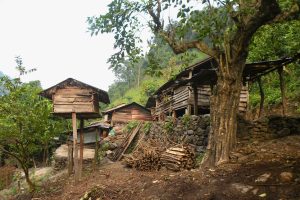
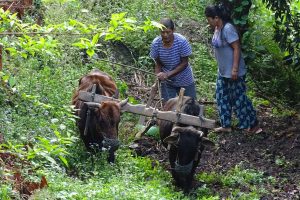
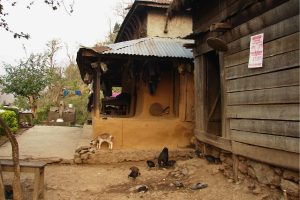
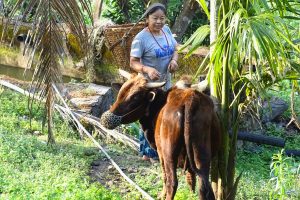
Surrounding the camp is the family farm, where visitors can walk through fields and orchards while learning about subsistence farming in rural Nepal. Mangos, lychees, guavas, lemons, pears, bananas, pineapple, and many other fruits grow alongside rice, corn, lentils, vegetables, herbs, and spices. Chickens, goats, pigs, cows, oxen, rabbits, cats, and dogs all play their part in daily life.
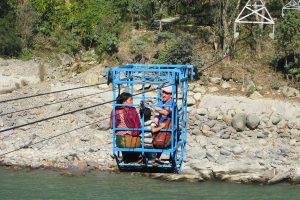 When Kelly bhauju first visited Chhimkesory after meeting Nim in 2004, the village could only be reached by dugout canoe across the Trisuli River. During the early days of camp construction, access improved with a manually operated cable car that required passengers to pull themselves across hand-over-hand. A few years later, a suspension bridge replaced the cable car, connecting the community to the outside world in a whole new way.
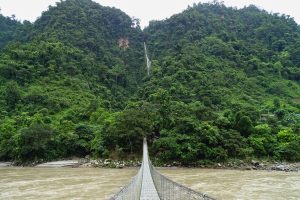
As the years passed and the camp became established, Nim gradually handed day-to-day operations over to his brother Santosh, who continues to lead and care for the property today. Sisters and nephews live next door and support Mum and Dad as well as Santosh with farm and camp chores. Like many parts of Paddle Nepal’s story, Chhimkesory has always been a family effort, evolving through the contributions of parents, brothers, guides, friends, and local community members.
What began as a way to support a family farm and preserve a connection to village life has since welcomed an incredible variety of visitors. School groups, youth programs, corporate teams, guide training courses, kayakers, rafters, and independent travellers have all gathered around the same dining hall, campfires, and river beaches over the years. Many Paddle Nepal guests know Chhimkesory as the place where multiple adventures come together, while countless river guides remember it as a place of learning, training, and shared experiences.
Despite these changes, the heart of Chhimkesory remains much the same as it was in the beginning—a simple riverside place built by hand, rooted in family, community, and the rhythms of rural Nepal.
(To be continued…)
This reflection is part of Paddle Nepal’s 20-year journey on Nepal’s rivers.