
Nim’s story continues — this time back on Nepali rivers.
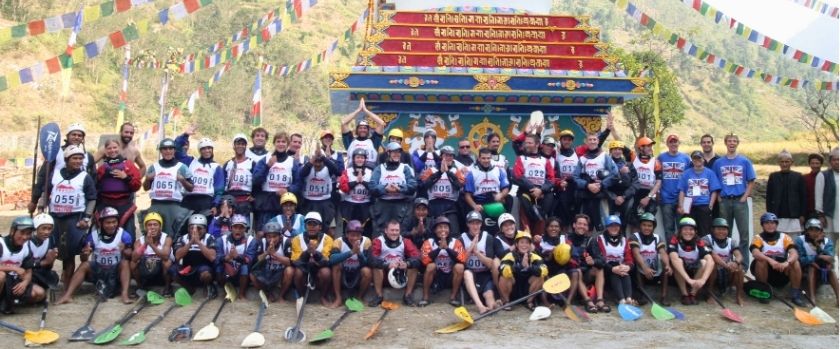
The Nepal Rodeo had already been running for several years. It was primarily a freestyle event — a gathering of paddlers who came together each year to compete, connect, and spend time on the river.
In 2002, that changed. Pete returned to Nepal, this time with a broader vision for the event. Rather than creating something entirely new, the Rodeo was expanded and elevated.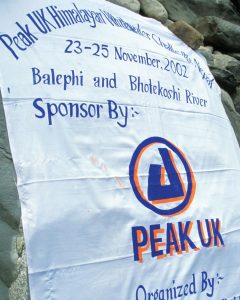
It became the first Peak UK Himalayan Whitewater Challenge, held from 23–25 November 2002 on the Bhote Koshi and Balephi Rivers. The event was sponsored by Peak UK and organized by the Nepal Association of Rafting Agents (NARA), who continue to run the competition to this day.
The biggest shift was in the format. Instead of focusing only on freestyle, the event included multiple disciplines:
- Freestyle
- Downriver racing
- Slalom
- Head-to-head
One of the most unique aspects of the event was how equipment was handled. Paddlers had to use the same boat for every discipline.
A playboat might give you an advantage in freestyle — but slow you down in the downriver race.
A long, fast racing boat could perform well downstream — but make freestyle far more difficult.
It added a layer of strategy, challenge, and a bit of humor — and made the competition even more engaging to watch.
For Nepali paddlers, it created new opportunities to compete and engage with the international whitewater community in different ways.
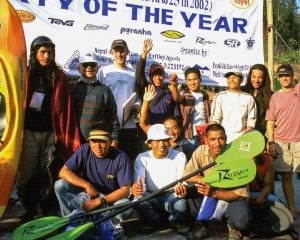 Nim was part of that first edition — finishing on the podium. He didn’t take the win, but the format left a strong impression. Pete Astles and Gerry Moffatt were there celebrating the podium finishers — Gerry having also played a key role in the early Nepal Rodeo.
Competing across four disciplines in a single boat was no small challenge. It pushed paddlers out of their comfort zones — and for Nim, it was a glimpse of what the event could become. An exciting step forward, and something he was eager to be part of in the years ahead.
Looking back, this moment stands out not because it was dramatic, but because it marked a clear step forward.
The event had grown.
The scope had expanded.
And the connections that had started forming were beginning to take shape on Nepali rivers.
Over time, the Himalayan Whitewater Challenge would go on to become an important part of Nepal’s paddling scene — and a key point of connection between local and international communities.
(To be continued…)
Over the next weeks, we’ll share more about Nim and Pete’s journey after the first Himalayan Whitewater Challenge — exploring rivers and competitions across Europe together.
This reflection is part of Paddle Nepal’s 20-year journey on Nepal’s rivers.