


As we approach the New Year, we find ourselves reflecting at a meaningful moment.
In 2026, Paddle Nepal celebrates 20 years.
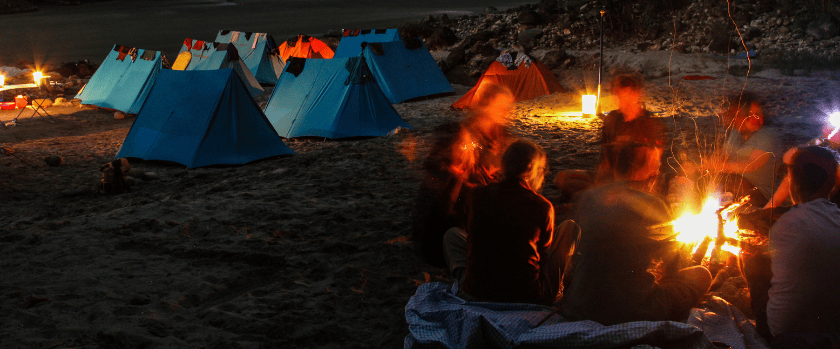
Twenty years of rivers, canyons, and lakes — of people, learning, growth, family, and friendships. Twenty years of long days on the water and quiet nights around campfires. Twenty years of showing up — not always loudly, but consistently — and allowing the work to shape who we are.
As we step into this milestone year, it feels right to pause, look back, and also look forward — because Paddle Nepal has always been about movement, evolution, and finding our way through the current.
How It Began — 20 years of Paddle Nepal.
Paddle Nepal’s story begins long before the company existed.
Our founder and Managing Director, Nim, began his river journey as a young boy watching rafting companies pass through his village along the Trisuli River. He would race down to the beach to help guides at lunch stops or camp — carrying gear, learning by watching, waiting for a chance.
That chance came in 1992, when Nim became a trainee river guide.
From farmer to trainee, to guide, to competitor, to business owner, to coach and instructor, each step was shaped by time on the river and by people willing to pass on knowledge, opportunity, and trust.
Competition played a defining role in those early years. Through events like the Himalayan Whitewater Challenge, Nim developed his skills, built confidence, and gradually assembled his first fleet of kayaks. His journey later took him beyond Nepal — representing the country at European Cups and World Championships, and eventually competing at the Asian Games in Korea.
As Paddle Nepal grew, competition gave way to service. Nim stepped back from racing to support the wider river community — serving as President of the Nepal Association of Rafting Agents, and later as a Nepal Sports Council / Olympic Committee Watersports Technical Coordinator and National Coach.
These experiences shaped Paddle Nepal’s early values: commitment to excellence, mentorship, and creating pathways for others to grow. Those values still guide us today.
Growing Up as a Company — Paying It Forward
Over two decades, Paddle Nepal has evolved alongside Nepal’s adventure tourism landscape.
What began with rafting and kayaking has grown into multi-day river expeditions, canyoning, stand-up paddleboarding (SUP), kayak school programs, niche fishing and biodiversity adventures, school and youth programs, and professional guide training — always with a focus on safety, responsibility, and real experience on the water.
In 2016, Nim achieved International Rafting Federation (IRF) Instructor certification, formalizing his long-standing commitment to training Nepalese river guides. In 2025, another major milestone followed: achieving Rescue 3 International Whitewater Rescue Technician (WRT) Instructor certification, and Paddle Nepal becoming an official Rescue 3 International Training Provider.
This makes Paddle Nepal not only the only Rescue 3 provider in Nepal, but the only provider across the entire Himalayan region, including India and Bhutan.
Together, these qualifications allow us to train local guides to the highest international standards — improving safety on Nepal’s rivers while also opening access to overseas work opportunities. We’re proud that this seasonal pathway allows many guides to return home part of the year, maintaining family and community connections rather than permanent migration.
Learning Together — Long-Term Partnerships
Some of the work we’re most proud of happens quietly and consistently.
Since 2018, we’ve worked closely with United World College of South East Asia (UWCSEA), running their Grade 9 Learn to Whitewater Kayak Program in Nepal. With our new Rescue 3 accreditation, we’re excited to welcome their Outdoor Education teachers early in 2026 for WRT-Pro certification, followed by another group of students in the spring.
We’re also proud to run rafting, kayaking, and canyoning programs for the Kathmandu International Study Center (KISC), and we’re currently onboarding additional schools and youth groups for 2026. These programs require a different kind of care — strong systems, experienced supervision, and close collaboration with teachers — and they’re something we’re committed to growing thoughtfully.
SUP in Pokhara — Done with Care
Stand-up paddleboarding in Pokhara has grown rapidly, and so has interest in Phewa Lake.
In late 2025, we were grateful to welcome Joe and his team from Alexander Adventures, who provided our lake crew with first-class SUP coaching. Today, our team is confident supporting guests with both sit-down and stand-up SUP, helping people paddle with confidence rather than simply renting boards.
We provide Peak PS ISO-certified safety equipment, clear briefings, and a dedicated safety team on the water, with guides available for instruction when requested. For us, SUP isn’t a trend — it’s another way to connect people to water responsibly.
Rivers Change — And So Do We
Nepal’s rivers are changing. Dam construction is increasing across the country, and the future of iconic journeys such as the Karnali River remains uncertain.
We’re not giving up.
While we once believed last year might have been our final season on the Karnali, we’re grateful that — although licenses have been approved — construction has not yet begun on the stretches we run. For now, this gives us time.
We remain in communication with the Nepal River Conservation Trust (NRCT) to better understand the current state of the Save the Karnali campaign and how we can meaningfully support it. As this work continues, we’re hopeful to collaborate with both local and international conservation partners in 2026, while continuing to offer a small number of rafting, kayaking, and golden mahseer fishing expeditions on this sacred river.
We’re also beginning to learn more about a community-led conservation initiative in the Bardia region (CBAPU), working within community forests alongside Bardia National Park. It’s an inspiring example of how conservation, livelihoods, and eco-tourism can intersect — and something we’re keen to understand better as we look ahead.
As our 20th year unfolds, we hope to explore meaningful ways to connect our guests with conservation stories like this — where rivers, wildlife, and local communities are deeply intertwined. These values resonate deeply with our family, and are especially close to the heart of Nim’s wife, Kelly, who works quietly behind the scenes at Paddle Nepal, helping hold everything together.
Looking Ahead — Full Circle
As we celebrate 20 years, we’re also returning to our roots: competition, mentorship, and opportunity.
In 2026, Paddle Nepal plans to dedicate 10% of all trip sales to a fund supporting less-privileged men and women to access free or heavily subsidized river guide training, whitewater rescue training, and first aid certification, alongside professional safety equipment and paid internships.
We’re also exploring plans to invite someone very special back to Nepal — a long-time supporter and familiar face from the early days of whitewater competition here — to be part of a reunion and special event marking our 20th year.
The vision is to host a downriver kayaking and rafting gathering that honours where Nepal’s paddling community began, celebrates how far it has come, and creates inspiration and opportunity for the next generation.
Details are still taking shape, but the intention feels right. Stay tuned.
This feels like coming full circle — not to recreate the past, but to honour it while opening doors for the next generation.
Details will be shared when they’re ready. For now, we’re simply grateful to be at this moment.
Still Paddling Forward
Twenty years on, Paddle Nepal remains a family-shaped business — grounded in relationships, shaped by rivers, and guided by responsibility.
Thank you to everyone who has been part of the journey so far: guests, students, guides, partners, friends, family and communities along the rivers we love.
As we step into 2026, 20 years of Paddle Nepal, we do so with gratitude — and with quiet excitement for what lies ahead.
Here’s to 20 years on the river — and to the journeys still to come.
