
The Yellow Train That Never Came
Later that year, Later that year, before Paddle Nepal existed and before any long-term plan had taken shape, Nim was given an opportunity that would quietly shape everything that followed.
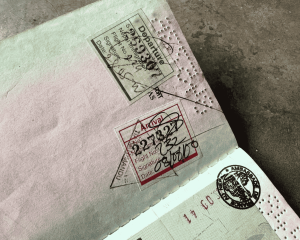 The Government of Nepal selected him to represent the country at the World Championships in France — an opportunity he had earned through his performance in the national flatwater selection race and his run on the Upper Seti under the watchful eye of the ICN technical director.
He would become the first Nepali athlete ever to represent Nepal internationally in kayaking.
He went alone.
No coach.
No team manager.
No support staff.
It was his first time on an airplane.
His first time leaving Nepal.
For many athletes, a World Championship means infrastructure — planning, guidance, logistics. For Nim, it meant a plane ticket and one simple instruction:

“Take the yellow train to the competition venue.”
He landed at Charles de Gaulle Airport in Paris and began navigating unfamiliar corridors, signs, and train platforms on his own. The airport connects directly to the city’s rail network, and before long he found himself underground, holding a paddle bag, studying a transport map in a language he did not fully understand.
He was not terrified.
But he was alone.
Nervous.
Uncertain.
So he did what he had been told.
He waited for the yellow train.
He waited for eight hours.
There was no yellow train.
Eventually, someone noticed the paddle bag. A European paddler approached him and asked,
“Are you going to Worlds?”
That simple question changed the day.
Together, they figured out the railway system. Nim learned that the train itself was not yellow — the route map was. The line he needed to take was marked in yellow on the network diagram.
Like navigating a river, he had to learn to read the lines in front of him — even in unfamiliar terrain.
They travelled to the event venue together.
This was before smartphones.
Before Google Maps.
Before instant translation apps.
Just a young Nepali athlete — the first of his kind — carrying his gear, carrying his country, determined to show up.
And show up he did.
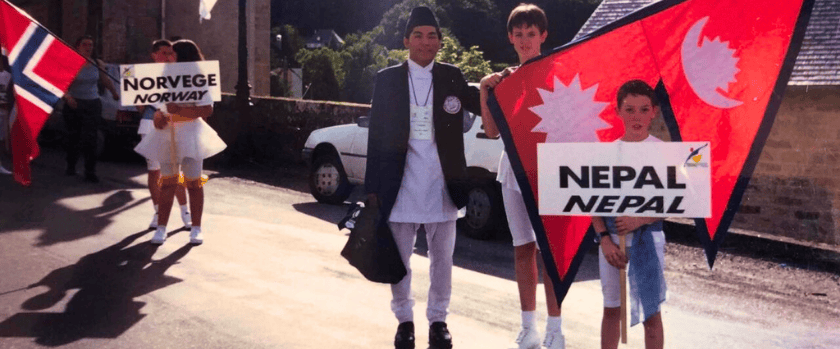
Standing at the opening ceremony in traditional Nepali dress, flag in hand, ready to represent a nation — after navigating the world alone to get there.
(To be continued…)
Next week, we step onto the world stage — the opening ceremony, the anthem that wasn’t ready, and the lessons that shaped far more than race results.
This reflection is part of Paddle Nepal’s 20-year journey on Nepal’s rivers.