

Some chapters don’t replace what came before.
They build on it.
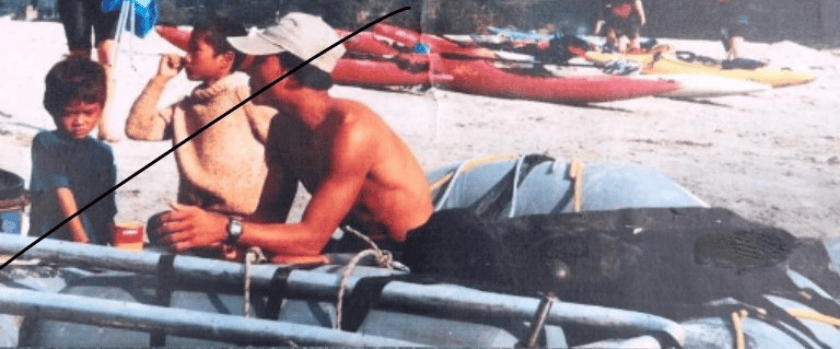
By the mid-1990s, Nim was already finding his footing on Nepal’s rivers — guiding, learning, and steadily growing in confidence. But it was around 1995, when he began working with Equator Expeditions, that Nim says his career truly began to take shape.
Not because everything before was insignificant — but because this chapter expanded his world.
A Wider River World
Equator Expeditions, led by Mahendra Thapa, was deeply connected to the international expedition scene in Nepal. Through this work, Nim was exposed to a broader river culture — one shaped by long expeditions, first descents, and visiting river professionals from around the world.
When Nim talks about this time, he often says simply:
“This is where my career really began.”
At Equator, Nim learned by being present — watching how expedition leaders planned, how teams moved together in remote places, and how knowledge was shared across borders and generations.
Even after Nim finished working with Equator in the early 2000s, Mahendra and Nim remained close friends. To this day, Mahendra continues to support Nim and Paddle Nepal — not just with guidance and wisdom, but sometimes with the odd short-term loan too (and yes… we may still owe him a little 😉).
Mentors, Legends, and Shared River Time
Equator’s circle included some of the most respected names in Himalayan whitewater.
One of the most influential figures in Nim’s journey is Gerry Moffatt — expedition kayaker, filmmaker, and long-time mentor. Gerry’s decades of exploration and storytelling across the Himalayas helped shape how many people understand rivers, adventure, and life on the water. Gerry remains very close to Nim to this day as a trusted mentor and friend.
Also part of that era were paddlers such as Mikey Abbot, Allan Ellard, and David Allardice — members of the legendary team responsible for the first descent of the Tsangpo Gorge in Tibet, one of the most consequential river expeditions in modern whitewater history.
Another key figure from that time was Peter Knowles — known fondly in paddling circles as Slime dai — co-author of White Water Nepal, widely regarded as the definitive guidebook to Himalayan whitewater and still considered a foundational reference for paddlers in the region.
What mattered most to Nim wasn’t proximity to big names.
It was shared time on the river.
Watching how expedition leaders thought.
Learning how teams functioned in remote places.
Seeing what long, committed river journeys truly involved.
A Shared History on Film
One of the most personal reflections of this shared era can be seen in The Tenth Step, a deeply reflective film by Gerry Moffatt exploring rivers, recovery, and the passage of time in the Himalayas.
If you watch closely, you may even spot a younger Nim in a few clips — quietly part of those early expedition days. It’s a powerful reminder of how intertwined these river journeys were — and still are.
We encourage anyone interested in the deeper story of Himalayan rivers to seek out the film and support it through donation. It’s not just an adventure film — it’s a shared memory.
Big Rivers, Long Journeys
Perhaps the biggest difference working with Equator wasn’t only the people — it was the opportunity to run true multi-day Himalayan expeditions.
Journeys on rivers like the Sun Koshi, Tamur, and Karnali became part of Nim’s lived experience. The Karnali, in particular, remains one of our favourite rivers to this day — a place that continues to shape Paddle Nepal’s values and vision.
Looking Back From 2026
As Paddle Nepal steps into its 20th year, we’ve been looking back on these chapters with deep gratitude — and a quiet kind of nostalgia.
(To be continued…)
Next week, we’ll share how these years on expedition rivers quietly opened the door to the world of competition — long before medals or titles were part of the picture.
This reflection is part of Paddle Nepal’s 20-year journey on Nepal’s rivers.